Being As It Is

In Tokyo, the cherry blossoms have passed their peak, and their petals are now fluttering lightly through the air. Perhaps the beauty we perceive in their transience lies in the fact that they bloom and fall just as they are, without clinging to remaining in their current form or state. There is no pretense of trying to “look good” in them.

It is important to strive to be better and work on self-improvement. However, when we look at our daily lives, we often find ourselves feeling the pressure to “make ourselves look good to others” in our relationships.

When we become fixated on becoming our unrealistic ideal image driven by self-doubt (“I’m not good enough”) or anxiety (“I’m lacking something”), unnatural tension arises. The moment we try to stretch ourselves to become “something else” that is other than who we are, our mind and body tenses up and becomes rigid.

To release this tension, we need to “calm our mind at the One Point in our lower abdomen” during these moments in our daily life.

Once the overwhelmed / upperside condition subsides, just as the moon is reflected on the calm surface of a lake, we will be able to see our true self clearly. We may even realize that we are attempting to “put on a front” to appear as something more than we really are. It is precisely this realization that will free us from that unnatural tension.

We should be especially careful when we find ourselves “trying to live up to others’ expectations.” Everyone has different expectations, and it is simply impossible to meet them all. “Expectations” are external things that others arbitrarily place on us, while our “roles” are internal things which we consciously recognize within ourselves. Do not be swayed by something as vague as expectations; simply understand our own roles and do our best in what you need to do.

The same applies to writing. The moment we fall into the trap of trying too hard to “write well,” the natural flow becomes stagnant, and the words lose their vitality. While writing my new book, “Chikara o Nuku Renshu” [Practice of Relaxing Completely], which is now being published, I felt tension whenever my pen stopped moving, and I had to return to the practice of calming my mind on the One Point in the abdomen. Through this process, I was able to create a book that captures things exactly as they are.

When we release the tension that comes from trying to “present ourselves in the best light” or “put on a good show”, and return to our true selves, we shed the burdens we have unknowingly been carrying, allowing the inherent strength that all humans possess to shine through.

The publication of this book was, in fact, a personal practice for me through the very act of writing. I hope you will pick up this book at this time of year when the seasons are changing.

On sale May 22, 2026 <Japanese version only>: “Chikara o Nuku Renshu: Dojinai Jibun no Yashinaikata” [Direct translation: Practice of Relaxing Completely: How to Cultivate an Unshakeable Self] by Shinichi Tohei (Gentosha Inc.) https://www.amazon.co.jp/exec/obidos/ASIN/4344045696/

Translated by Mayumi Case
Edited by David Shaner
Eastern Ki Federation
https://easternkifederation.org/

Original article in Japanese: あるがまま、ありのまま (Aru ga mama, Ari no mama)
April 1, 2026 
https://shinichitohei.com/japanese/01-%e3%82%b3%e3%83%a9%e3%83%a0/36784/
Calmness

March has arrived, bringing signs of spring across Japan. As the fiscal year draws to a close [in Japan], many of us are likely busy preparing for new beginnings, both physically and mentally. When everything around us starts to move at a frantic pace, it is easy for our mind to lose its calm and composure.

Generally, when we tell ourselves, “to calm down”, it might bring to our mind a state of holding back on activities or staying still without moving. However, the “calmness” taught in Shinshin Toitsu Aikido does not simply mean the absence of movement.

Do you remember the spinning tops you played with as a child? When spinning powerfully, a top appears perfectly still from a distance once its center stabilizes. Yet inside, it is filled with energy. If its rotation weakens, the top begins to wobble unsteadily, easily toppling with even the slightest external impact.

In other words, that “stillness” does not refer to a lifeless, motionless state. When the center is established, energy remains stable. Koichi Tohei sensei explained that this state is “stillness at the pinnacle of movement.”

Let us apply this to our mind. When the mind appears to be still, there are actually two states that are qualitatively different.

One is a state of mental “freeze.” When we are faced with unexpected trouble and our mind freezes up, our field of vision narrows, and we lose the ability to grasp the surrounding situation. It is a state where our energy is not being utilized and stagnant. In this state, we are at the mercy of external influences and are unable to respond appropriately.

The other is the state of mental “stillness” we should strive for. This refers to a state of being full of energy, yet maintaining unwavering stability, like a rapidly spinning top. By calming our mind at the One Point in the lower abdomen and maintaining our center, we can respond calmly no matter how frantically the world around us moves.

What is important here is that a state of stillness does not mean becoming less sensitive. Actually, it is quite the opposite. The more the mind becomes still, the more sensitive we become, enabling us to grasp the surrounding situation more accurately.

When the surface of the water is as calm and still as a mirror, the moon in the sky and the birds on the branches are clearly reflected as they are. If water’s surface is rippled, the reflected image will be distorted. It is only when our minds are calm that we can grasp the true essence of things.

There is no need to forcibly suppress our emotions. If we calm our mind in the One Point in the lower abdomen, even when big waves arise, we will naturally return to our original calm state. Only then will we be able to face important situations without losing our composure and fully utilize our abilities.

No matter how hectic our days may be, we can maintain a sense of calm within ourselves. We can develop a deep sensitivity without being tossed about by the waves of emotions. The ancient saying “Bo-chu, kan ari” (“There is leisure even in the midst of busyness” = Even when we are busy, we can still find a moment of calm) means more than just carving out time amidst busyness.

True “calmness” is a state overflowing with energy.

Translated by Mayumi Case
Edited by David Shaner
Eastern Ki Federation
https://easternkifederation.org/

Original article in Japanese: 落ち着き (Ochitsuki)
March 1, 2026 
https://shinichitohei.com/japanese/01-%e3%82%b3%e3%83%a9%e3%83%a0/36784/
“Extend Ki” Means to Take Action

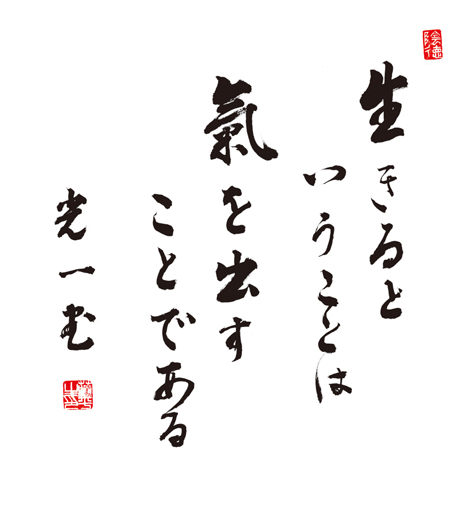
The most important teaching in Shinshin Toitsu Aikido training is to “Extend Ki.” When people hear the phrase, “Extend Ki,” some people perceive it as something abstract and spiritual, but that is different from the original meaning. This is not something we “think with our heart” or “think with our head”, either. To Extend Ki means to take action, and it is the concrete action itself.

What taught me this was an event I witnessed with my own eyes when I was a child. At that time, there was a student who diligently attended the dojo, but one day, he was involved in an unfortunate traffic accident and was forced to use a wheelchair.

One day, when those around him were worried that it might be difficult for him to continue practicing Aikido, he showed up at the dojo with his helper. He then requested, “Please allow me to take the scheduled promotion test.”

“I cannot move, but I can speak.” – His words were filled with determination.

At the dojo, the prevailing sentiment was negative, with many saying, “We can’t give special treatment for the promotion examination.” But when Koichi Tohei sensei heard this, he gathered the instructors and sternly rebuked them saying:

“What have you been teaching at the dojo all this time?! It is true that, he can no longer perform the techniques because of the accident. But instead of lamenting what he can’t do, he is trying to find what he can do now and put all his effort into it. This is what it means to Extend Ki!”

The voice of this student during the examination was impressive and resonated throughout the entire dojo with remarkable clarity. Koichi Tohei sensei offered him the highest praise, saying, “You passed.” The student responded with tears welling in his eyes, “I will continue to Extend Ki and live my life.”

After undergoing extensive rehabilitation, the student was able to successfully return to society. By “Extending Ki”, he took charge of his own life journey.

When we face difficulties, our immediate view is often filled with things we cannot do. But, when our minds become fixated on what we cannot do, our Ki quickly stagnates/gets stuck and we will lose our power. No matter how difficult the situation may seem, there is always something we can do. Not lamenting what we “cannot do”, but doing our best at what we “can do”; this is what it means to “Extend Ki”.

The same applies to our daily lives. Instead of just waiting for motivation to come to us, taking action on what we can do right in front of us — no matter how small it may seem — is exactly what Extending Ki means.

When we Extend Ki, new Ki naturally flows in. By extending our own Ki first, stagnant or blocked Ki will gradually be cleared. As the result, we reach a state of fulfillment in both body and mind, where our “Ki is Extending (flowing freely)”, for the first time.

Whether or not our Ki is Extending/flowing freely or getting stuck/stagnant is clearly reflected in “how we feel” and “how we perceive things” in all sorts of everyday situations. This difference is clearly evident in how one feels and perceives things in all sorts of everyday situations.

When our Ki is Extending, we can savor the flavors of our food with remarkable clarity and truly appreciate the kindness of those around us. Conversely, when our Ki is stuck/ stagnant, even the most delicious meal may taste bland, and someone’s kindness might even feel like a nuisance.

If we wish to live bright and positive days, we need to maintain a state where our Ki is always extending. In order to do this, we must “Extend Ki”. That is, take the first step we can take right now, at this very moment.

I myself practice Extending Ki every day.

Translated by Mayumi Case
Edited by David Shaner
Eastern Ki Federation
https://easternkifederation.org/

Original article in Japanese: 「氣を出す」とは行動すること (「Ki o dasu」 towa kōdō suru koto)
February 1, 2026 
https://shinichitohei.com/japanese/01-%e3%82%b3%e3%83%a9%e3%83%a0/36784/

Knowing

When I was a child, my father was admitted to the hospital as a precaution. He was discharged after about a week, but my mother stayed with him every day in his private hospital room to care for him.

One day, we heard children making noise in the next room. My mother was quite annoyed and said angrily, “How inconsiderate! This is a hospital!” To me, it seemed like my angry mother was making much more noise, but it is true that hospitals are supposed to be quiet.

Just then, a nurse came into my father’s room to provide care. When my mother complained about the noise, the nurse apologized and explained the circumstances of the family in the next room. They seemed to be going through a very difficult time.

My mother’s irritation instantly subsided, and not only that, she began to show concern for the family in the next room. This was despite the fact that just moments before, she had been shouting, “How inconsiderate!” Which one was my real mother? Of course, both were her true selves. The only difference was whether or not she knew the other person’s circumstances and feelings.

“Ignorance” breeds “Lack of understanding” (“Furikai”).
“Lack of understanding” breeds “intolerance”.
“Intolerance” breeds excessive stress, leading to trouble.

While the term “Not understanding” (“Murikai”) is more commonly used in Japanese, I think “Lack of understanding” (“Furikai”) would be more accurate in this context. This is because “Lack of understanding” is not an intentional rejection or lack of empathy.

If someone does something unpleasant to us, it is only natural for us to feel upset. However, knowing why they behaved that way can make it easier for us to tolerate the situation, even if the situation itself doesn’t change. As a result, we become less susceptible to stress. Knowing and understanding the other person benefits them, but it also benefits us. Because we don’t know the other person, we fill in that gap with own interpretations. This is where “Lack of understanding” (“Furikai”) begins.

Defamation and abuse on the Internet have become a social problem, but it is mainly targeted at “people we don’t know”. It is difficult to do such things to people whose thoughts/feelings and circumstances we understand well.

“Knowing” doesn’t mean we pry into the other person’s secrets. It starts with asking about something simple, like “What kind of food do you like?” or “What are your hobbies?” If we try to jump straight into serious topics, both parties will be on guard, making the conversation itself will feel burdensome. As we get to know the other person, deeper conversations will naturally follow.

Nowadays, a growing number of people feel there is no point in spending time with strangers, and they entirely avoid social gatherings. For people who do not enjoy social bonding/connecting with others, it must feel like a torture. However, social interaction is about knowing each other, and it is an opportunity to increase our tolerance and reduce stress. This is especially true for those who must see each other every day.

It is impossible for “the place we are” to always be comfortable. We will not find such a place anywhere, no matter how much we search for it. It is important to increase our tolerance and make an effort to make “the place we are” comfortable.

Knowing is the first step toward understanding. It is one way to practice “Putting Yourself in the Place of Your Partner” [one of the Five Principles of Shinshin Toitsu Aikido].

Translated by Mayumi Case
Edited by David Shaner
Eastern Ki Federation
https://easternkifederation.org/

Original article in Japanese: 「知る」 ということ (“Shiru” to iu koto)
December 1, 2025 
https://shinichitohei.com/japanese/01-%e3%82%b3%e3%83%a9%e3%83%a0/36784/
To Overwrite

There are things [in our lives] that become long-standing habits. For example, drinking alcohol and smoking cigarettes. Even if we want to quit, it can be very difficult to stop. If we try to force ourselves to quit, it creates a lot of stress and it won’t last.

Because habits are formed over many years, simply changing the way we think or suddenly trying to quit will not lead to real change. Rather than trying to stop our existing habits, it is better to develop new ones. As a result, this will lead to a change in our habits.

It is the same when acquiring a technique through Aikido practice. What is important is not “trying not to tense up” to do the technique, but “executing it in a relaxed way” repeatedly until it becomes a habit. The key is to “overwrite” our previous way of doing it with a new one, and that is the fastest and most effective way to acquire it.

This time, I have decided to stop drinking the alcohol that I had been drinking every day without fail. It is not because of any health problem, but because I wanted to experiment with changing my habits. If I put myself in a repressed state of mind, like “I must not drink,” I knew I would get stressed out within a few days, and end up reaching for it again.

This past June, I visited Hida city in Gifu Prefecture. Hida city is a land rich in nature, with forests covering more than 90 percent of its area. More than 245 varieties of medicinal herbs grow there, and it is said that people who live in the mountain villages have long gathered wild herbs from the fields and forests, naturally bringing their healing properties into daily life. While I was there, I tried a cup of herbal tea, and it was so delicious that I decided that whenever I felt like having a drink, I would instead drink herbal tea. In other words, I overwrote/replaced the act of “drinking alcohol” with the act of “drinking herbal tea.”

I also made a point of keeping alcohol out of sight. The discomfort only lasted for the first three days. By the time three weeks had passed, not reaching for a drink had already become a habit, and now, three months later, it has become the norm for me. At social gatherings, I may still have a small sip for the toast, but I no longer feel any desire to drink on my own.

Once our Ki is set in motion, it is difficult to stop it. However, it is possible to respect the flow of Ki and guide it in the direction it should go. It seems like we are talking about Shinshin Toitsu Aikido practice! My experiment was a great success, and as a side benefit, it also led to significant weight loss!

In my experience, the periods that come with the number “three” are important for something to take root in our body; for example, three days, three weeks, three months, and three years. When we meet someone for the first time, the time, place, and content of the conversation remain vivid in our memory. The second time, they do not remain quite as clearly. From the third time onward, unless something special happens, they hardly remain at all. It seems that the number “three” is connected to becoming accustomed or getting used to something.

Many things happen in our lives. When something difficult happens, it can feel as if that moment will last forever. More often than not, however, we gradually adapt to the situation, and with time it is resolved.

First, we aim for three days. Once we get past that, we set our sights on three weeks, and then three months. By doing so, we can overcome difficulties. It is not only a period for something to take root in the body, but also a time period that is needed for our mind to accept it.

Translated by Mayumi Case
Edited by David Shaner
Eastern Ki Federation
https://easternkifederation.org/

Original article in Japanese: 上書きする (Uwagaki Suru)
September 1, 2025 
https://shinichitohei.com/japanese/01-%e3%82%b3%e3%83%a9%e3%83%a0/36784/
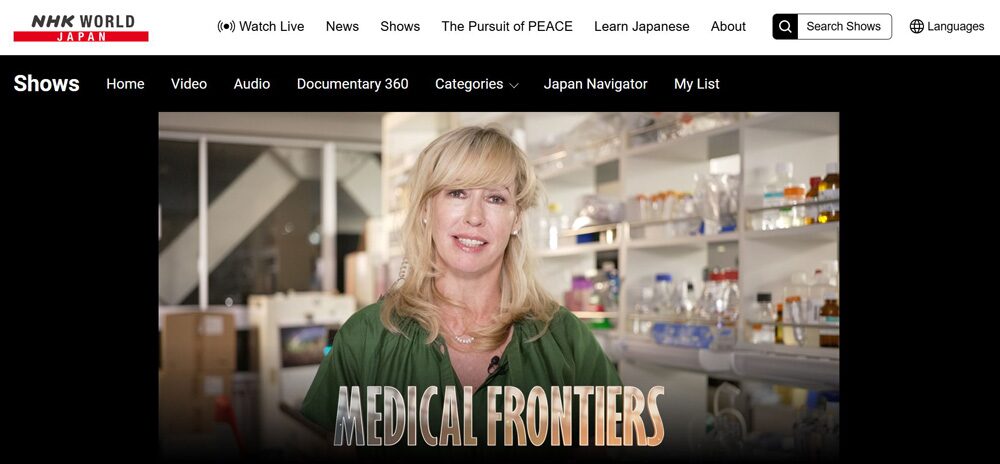
NHK WORLD-JAPAN “Medical Frontiers” part 2

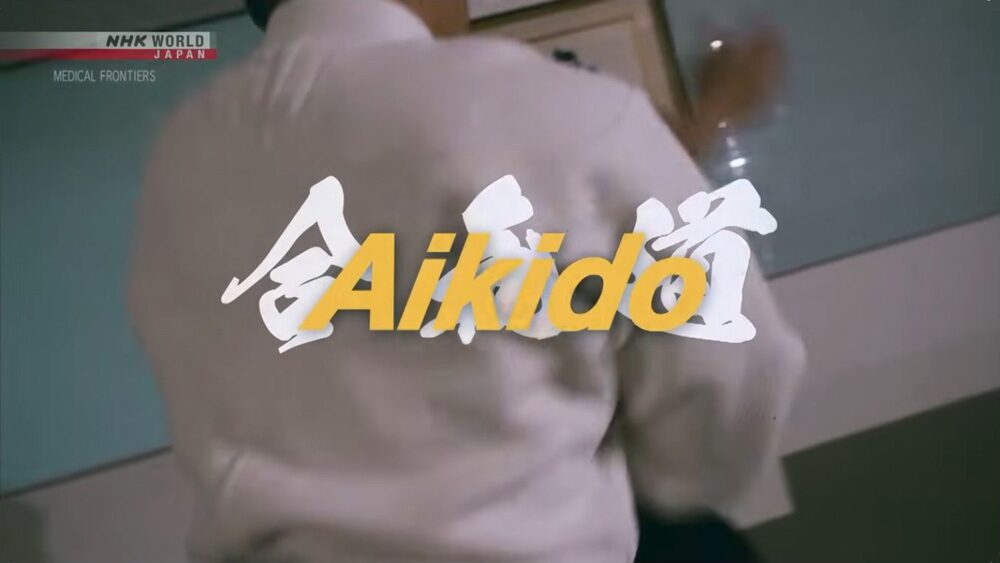
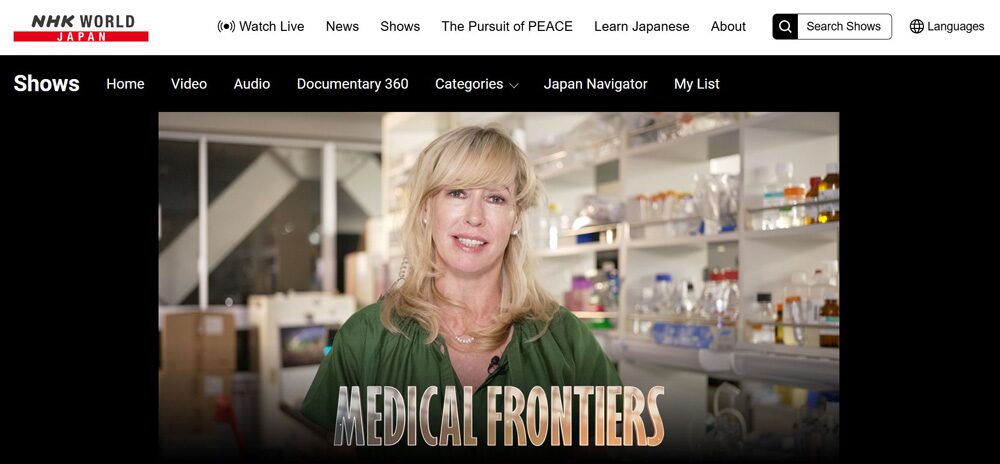
I am pleased to announce that I will appear on the NHK WORLD-JAPAN program “Medical Frontiers.”

This program is broadcast in English and introduces Japanese medical technology and healthcare. Within the 28-minute program, I will be featured in a 6-minute segment to discuss the principles of “Posture” and “Breathing” in Shin Shin Toitsu Aikido.

This upcoming broadcast is the second part of the series, following the first part aired in June.

I sincerely hope that the information shared will be helpful to you.


Broadcast Schedule (Part 2)

Times shown are in JST (Japan Standard Time).

  • Mon, January 5, 2026 | 23:30 –
  • Tue, January 6, 2026 | 5:30 – / 12:30 – / 18:30 –
  • Sat, January 10, 2026 | 4:00 –

How to Watch

The Blessing of Inconvenience

There are many people who have close ties to the Shinshin Toitsu Aikidokai and are in their 90s. Mr. Tatsuro Hiro-oka, a baseball commentator and critic, is 93 years old. Mr. Takeo Hori (the founder of “Hori Pro” [a major entertainment production company/talent agency]) is 92 years old. Ms. Midori Yamada, a nurse, is 94 years old. These people are all still very energetic and in great health even though they are over 90 years old.

What they have in common is that they try to do as much as possible on their own, deliberately choosing inconvenient methods/means to do things. Those around them may be tempted to help them out of good intentions; however, these older people are aware that taking easier ways to do things will weaken their physical abilities/functions. Of course, this is completely different from “pushing oneself too hard.”

All kinds of services in the world are becoming more convenient. That in itself is not a bad thing. However, if we do not use our mind and body, they will gradually weaken. If I am not paying attention, I often find myself choosing the escalator instead of the stairs at train stations, so I consciously try to face some inconveniences in my daily life.

I went to South Carolina in the United States to teach a seminar. This is my third visit to the beautiful city of Greenville. It takes nearly 20 hours one way from Japan, including all the connecting flights.

When we go abroad, our everyday normality changes completely. Ordering food at a restaurant or shopping at a supermarket suddenly becomes inconvenient due to language and cultural barriers.

This inconvenience, however, is a major stimulus for the brain and promotes its activation. When we are in a familiar environment, our life flows smoothly. But at the same time, it is also an environment where we do not have to use our brain.

Training sessions at seminars overseas are conducted in English, but because I am not a native speaker, if I let my guard down, I lose track of what the other person is saying. For this reason, I pay close attention to the “Ki” that the other person is sending with all my heart and soul.

As a result, during the four-day seminar, my brain seemed to be constantly working at a full capacity and undergoing dramatic changes. Even with people whom I could barely understand what they were saying on the first day, I was able to understand them properly by the final day. I find this to be a truly interesting phenomenon.

It is said that placing oneself in an unfamiliar environment enhances the brain’s plasticity, and I feel that all functions, including language, vision, judgment, and memory, become really activated. While we find some situation inconvenient, uncomfortable or unpleasant, it is also an opportunity for growth. The confusion and tension we feel in unfamiliar situations is definitely stressful. However, the sense of accomplishment we feel, when we overcome the discomfort, is irreplaceable.

When I returned to Japan, I thought to myself, “How convenient it is to be here!”, but at the same time, I also recognized the importance of placing myself in an inconvenient environment. I suppose this is all about enjoying the inconvenience.

Today is another scorching hot day in Japan. I am sure there will be many inconveniences, but I want to enjoy facing these inconveniences.

Translated by Mayumi Case
Edited by David Shaner
Eastern Ki Federation
https://easternkifederation.org/

Original article in Japanese: 不便というありがたさ (Fuben toiu Arigatasa)
August 1, 2025 
https://shinichitohei.com/japanese/01-%e3%82%b3%e3%83%a9%e3%83%a0/36784/
Shinshin Toitsudo

I was recently interviewed for the NHK World’s program called “Medical Frontiers” . This is a 28-minute program which introduces the latest Japanese medical technology and healthcare to overseas audiences, and I will appear in the “Tips for Healthy Living” segment, for two consecutive episodes, six-minute each.

An Australian female reporter with deep knowledge of Japan came and experienced the “posture” and “breathing” of Shinshin Toitsu Aikido.

We communicated in a mixture of Japanese and English, but she had a very high level of understanding and the filming went very smoothly.

“What are the characteristics of Shinshin Toitsu Aikido?”

This is one of the questions I am always asked in these interviews.

Shinshin Toitsu Aikido is aikido based on “Shinshin Toitsudo”. The goal of Shinshin Toitsudo is to be able to demonstrate the power we have, and we place importance upon “Building the Foundation” based on our ability to focus our mind on the One Point in the lower abdomen.

Natural posture has natural stability and balance, which allows us to perform at our best. Learning to use our body naturally is also important in daily life, and it will help us avoid getting tired when doing daily housework.

In “Building the Foundation”, it is important to focus not only upon the “physical” aspect, but also the “mental” aspect. Even a well-balanced posture can be ruined if mental pressure or stress causes your mind to become excited/nervous.

When speaking in front of people, if our mind gets too excited/nervous, then our mind goes blank and we cannot remember what you have prepared.

By practicing and mastering our ability to remain calm and focus the mind at the One Point in the lower abdomen on a daily basis, we will be able to fully utilize our power in important situations.

For these reasons, people at the forefront of various fields come [to us] to learn.

Shinshin Toitus Aikido techniques are not directly used in each of their fields, but rather, they will learn to be able to fully demonstrate their strength through “Building the Foundation” of Shinshin Toitsudo.

Baseball skills are developed by practicing baseball, and golf skills are developed by practicing golf. Practicing “Shinshin Toitsudo” is a kind of training that enables us to fully demonstrate [whatever] abilities we have acquired.

For example, in recent years I have been working on teaching sumo wrestlers. The power of sumo wrestlers is incredibly strong, but whether or not they can fully utilize that power is another matter. With a solid foundation, they will be able to release unnecessary tension and fully utilize their strength.

In the same way, I have also been training musicians. By quieting their mind in the lower abdomen, they can really listen to the sound they are playing. With a solid foundation, they will be able to release unnecessary tension and can handle their instrument freely.

In Shinshin Toitsu Aikido training, we practice the techniques based upon “Shinshin Toitsudo”. Some people hesitate to learn because they are worried about getting hurt. This is a valid concern, but there is no need to worry about it in Shinshin Toitsudo.

If you want to [learn how to] fully utilize your ability, we invite you to come and experience it for yourself.

Translated by Mayumi Case
Edited by David Shaner
Eastern Ki Federation
https://easternkifederation.org/

Original article in Japanese: 心身統一道とは? (Shinshin Toitsudo)
July 1, 2025 
https://shinichitohei.com/japanese/01-%e3%82%b3%e3%83%a9%e3%83%a0/36784/